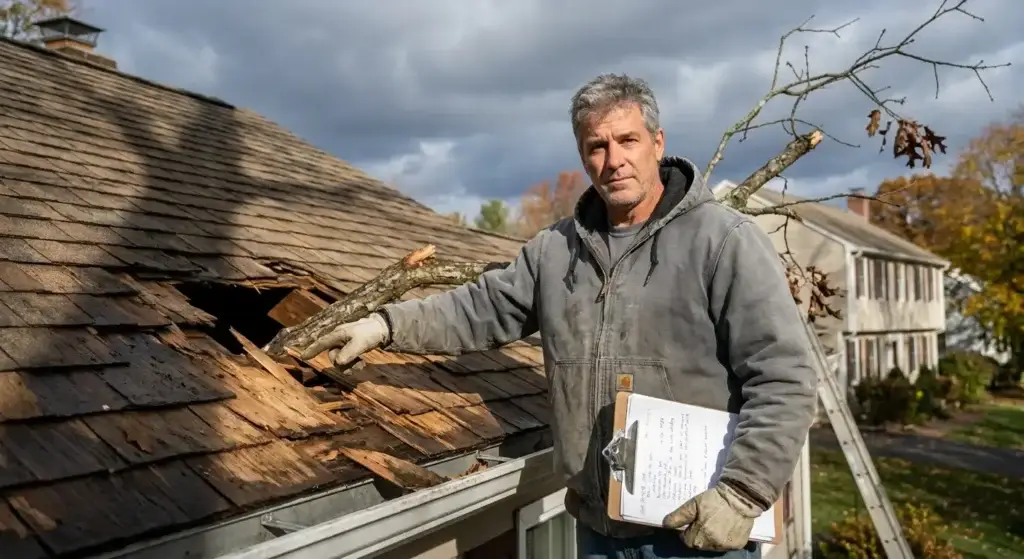
Storm damage roof repair Connecticut homeowners deal with every year usually starts the same way: you wake up, look outside, and see shingles on the lawn. Then the questions start. Do I call insurance first? Do I climb up there? Is that dark spot on the ceiling going to get worse before someone gets here? I’ve been on both sides of this, as a homeowner and as a contractor working in New London County for seven years, and I can tell you the first hour after a storm matters more than most people realize.
This is the guide I wish every homeowner in Gales Ferry, Ledyard, Norwich, Groton, and the surrounding towns had before the next nor’easter or tropical storm remnant rolls through. No fluff. Just the steps in the order you should take them.
Step One: Stay Safe and Stay Off the Roof
Before anything else: do not go up on the roof yourself. Wet shingles, loose flashing, and hidden soft spots put people in the emergency room every storm season. Even walking around the yard right after a storm is risky if there are downed power lines or unstable branches overhead.
Wait for daylight, put on real shoes, and check the property from the ground. That is enough to start.
Step Two: Document the Damage from the Ground
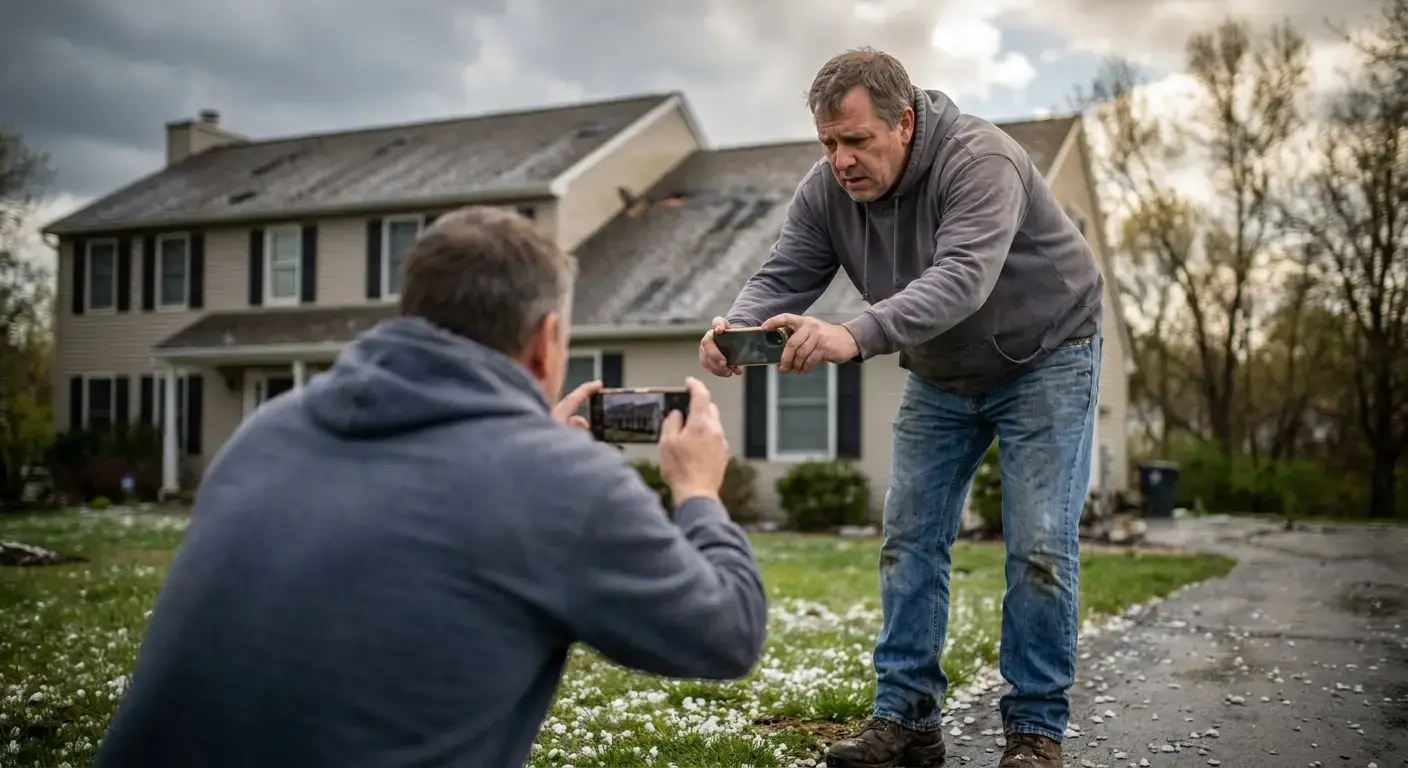
Insurance claims live and die on documentation. Before you call anyone, walk the perimeter of your house with your phone and take photos and video of:
- Shingles on the ground, in the gutters, or on the driveway
- Any visible sagging, missing sections, or exposed underlayment
- Broken or bent gutters and downspouts
- Debris on or near the roof (branches, tree limbs, hail on the deck)
- Interior water stains on ceilings and around windows
- The date and time on your phone’s camera settings, so timestamps match
Take more photos than you think you need. Wide shots first, then close-ups. If you saw hail during the storm, photograph it while it is still on the ground. That evidence disappears fast.
Step Three: Should You Call Your Insurance or a Roofer First?
This is the question I get most often, and the answer surprises people: call a local, established roofer for an inspection first. Here is why.
If you file an insurance claim before you know what the actual damage is, you may end up with a claim on record for something that turns out to be minor cosmetic damage. That can affect your premiums. A trustworthy local contractor will come out, walk the roof, and tell you honestly whether you have real storm damage worth filing a claim for. If you do, they will help you document it properly before you call the adjuster.
That said, if water is actively coming into the house, call your insurance company right away and get a claim number started while you also arrange for emergency tarping. Both can happen the same day.
Step Four: Get a Temporary Repair to Stop the Bleeding
Can You Tarp the Roof Yourself?
I strongly recommend you don’t. Tarping a roof properly means anchoring it into wood decking on the high side of the damage so wind cannot get under it, and doing it without creating new leak points. Done wrong, a DIY tarp does more damage than the storm did. Done right, it can save you thousands in interior repairs while you wait for a permanent fix.
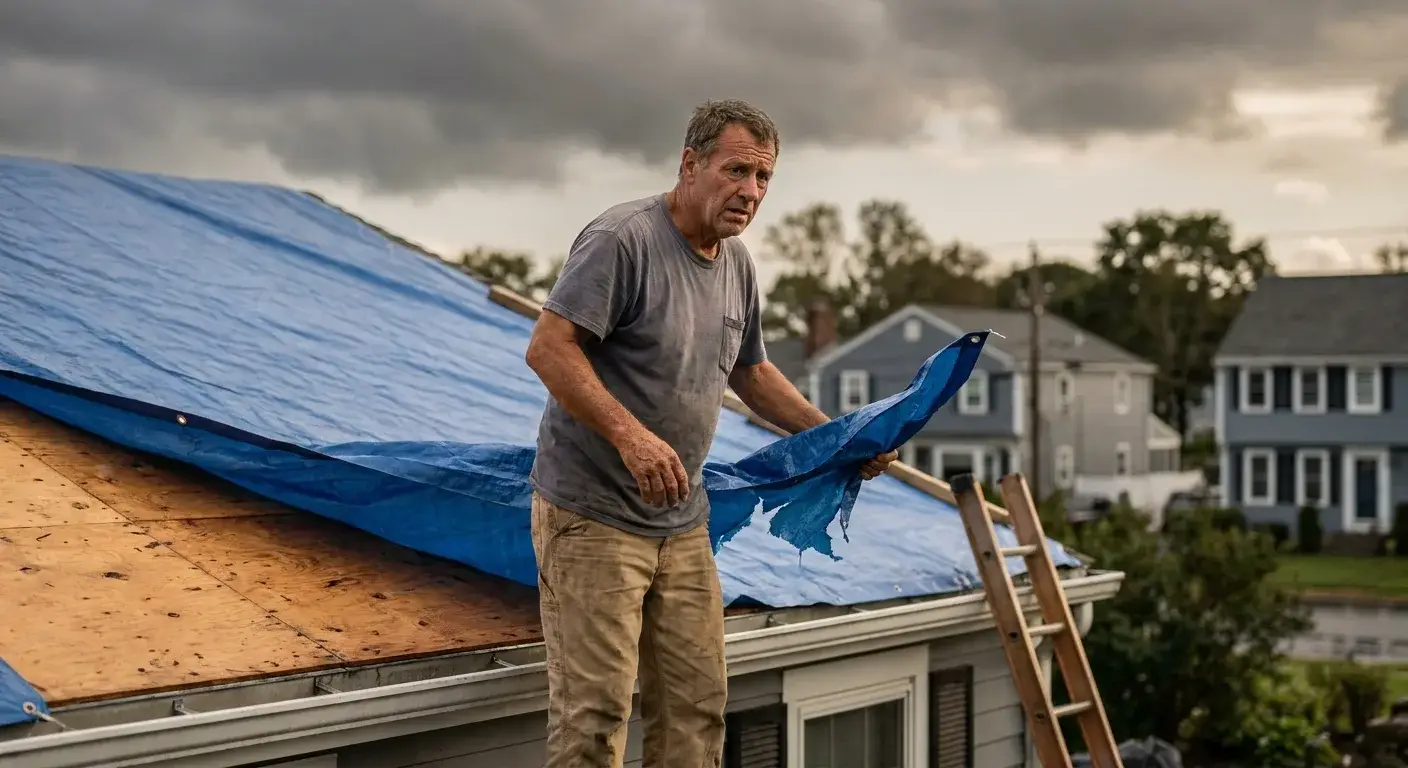
A qualified local contractor can usually get a proper emergency tarp on the same day or the next morning. Inside, you can help by moving furniture out of the drip zone, putting buckets under active leaks, and pulling back area rugs before the water reaches them.
Step Five: Watch Out for Storm Chasers
Here is where a lot of Connecticut homeowners get hurt. Within 24 to 48 hours of a major storm, out-of-state contractors show up in neighborhoods knocking on doors. They are called storm chasers, and they are a real problem. The National Roofing Contractors Association has warned homeowners about this pattern for years.
Signs you are dealing with a storm chaser and not a real local contractor:
- Out-of-state license plates on the truck
- No physical address in Connecticut, or an address that turns out to be a UPS store
- Pressure to sign a contract on the spot or “assign your insurance benefits” that day
- Cannot produce a Connecticut Home Improvement Contractor registration number
- No local references, no local past jobs you can drive by
- Cash-only or full payment up front
A legitimate Connecticut contractor will have a local address, carry Connecticut-issued credentials, provide references from named past jobs in your area, and be perfectly happy to give you 48 hours to think it over. If someone will not let you take a beat and check them out, that alone is your answer.
Step Six: Understand How Your Insurance Claim Will Work
Once you and your contractor have confirmed real storm damage worth claiming, here is the order things typically happen:
- You call your insurance company and file a claim. You will get a claim number and an adjuster assignment.
- The adjuster schedules a visit. Ask your roofing contractor to be there. This is important. A contractor who knows how to walk the roof with the adjuster catches damage the adjuster might miss.
- The adjuster writes an estimate based on what they observe. Your contractor can supplement that estimate with a scope of work if the adjuster’s numbers are low.
- Insurance pays out in stages, usually. Actual Cash Value first, then the depreciated portion once the work is completed and documented.
- You pay your deductible. It is illegal in Connecticut for a contractor to waive or “eat” your deductible. Anyone offering that is committing insurance fraud and pulling you into it.
Keep every document. Every photo, every estimate, every email with the adjuster. Store them in one folder on your phone or computer so you are not hunting for a receipt six months later.
Step Seven: Choose a Contractor Who Actually Lives Where You Live
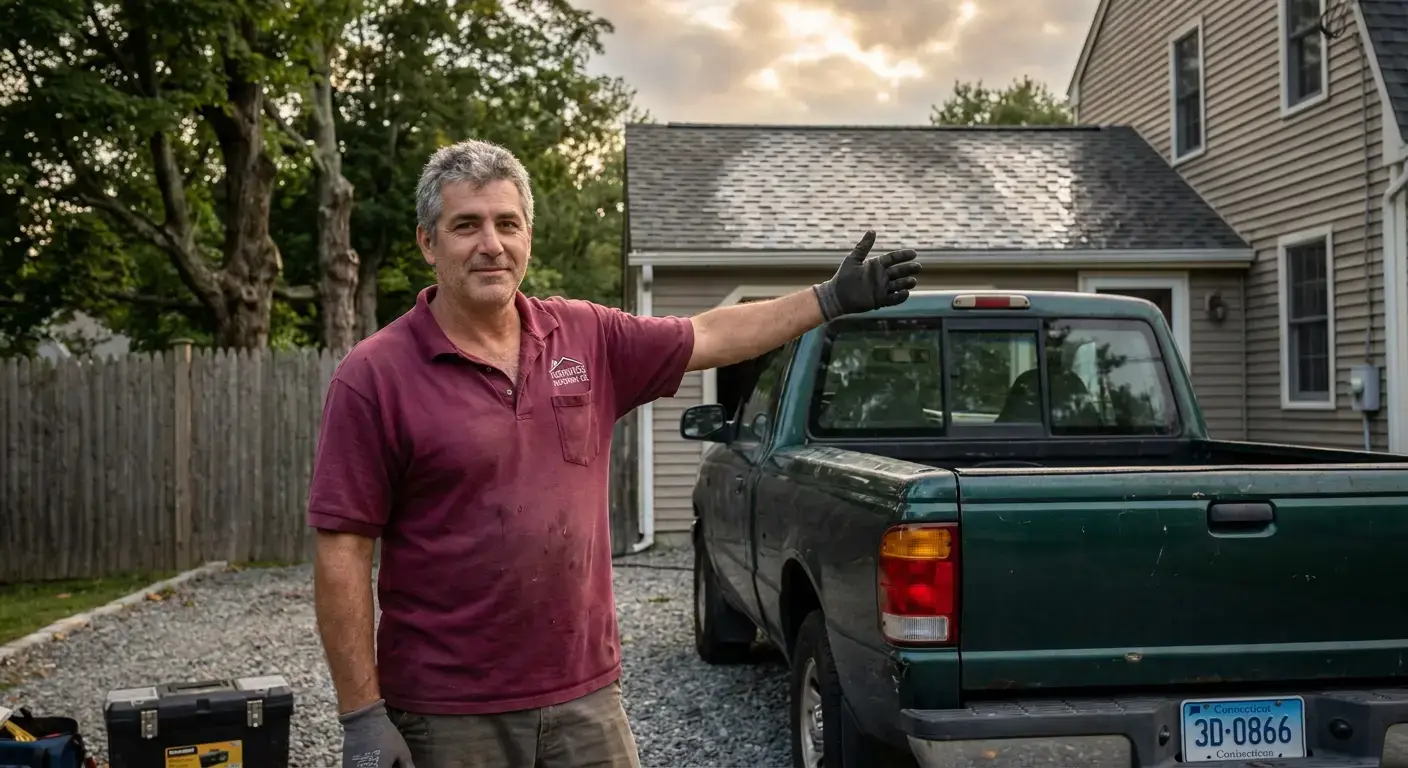
The homeowner-turned-contractor angle matters here. I have had roof damage on my own house. I have called my own insurance company. I have stood in my own kitchen looking up at a stain on the ceiling wondering how bad it was going to get. When I walk your roof after a storm, I am not just measuring a job. I am thinking about what I would want someone to do for me.
Ask any contractor you’re considering for storm damage roof repair Connecticut work three questions:
- How long have you been operating in this county, and can you show me two or three completed jobs within 20 miles?
- Are you registered with the Connecticut Department of Consumer Protection as a Home Improvement Contractor?
- Who answers the phone when I call, the owner or a call center?
If the person on the phone is the owner, and they can drive you past real finished jobs in Norwich, Groton, or Ledyard, you are dealing with someone who will still be here next year when a warranty issue comes up. That is what you want after a storm. Not a name on a business card that will disappear the next time you Google it.
What to Do Right Now, Before the Next Storm
Even if your roof is fine today, take 15 minutes this week to prepare:
- Take clear “before” photos of your roof from all four sides of the house. This baseline is invaluable for future claims.
- Find your homeowner’s insurance policy and confirm your deductible amount for wind and hail. Some Connecticut policies now carry a separate, higher wind deductible.
- Save the phone number of a local contractor you trust into your phone before you need it. When there is water in your living room is a bad time to start Googling.
- Look at what your renovation contractor actually covers. If you want an idea of the full scope of what a local outfit like ours handles beyond storm work, our services page covers roofing, siding, windows, and interior work under one roof.
Storm damage is stressful. It does not have to be a disaster on top of a disaster. Move in the right order: stay safe, document, call a real local contractor, get a proper temporary repair, and let the claim process work at the pace it needs to work. If you want a second opinion on damage from someone who has been on both sides of a renovation, reach out and I will come take a look. No pressure, no sales pitch on your porch, no signing anything the same day. Just an honest read on what you are actually dealing with.
Matt Longo owns Properties Done Right LLC in Gales Ferry, Connecticut, and has been running renovation projects across New London County for seven years.